Showing posts with label It Lies In The Heart. Show all posts

Saturday, June 25, 2022

MY DIARY - LOGBOOK 109-111

The Allahabad High court was established on 17th March 1866. It has completed one hundred and fifty years. The period of internal emergency 1975-77 was the 109th to 111th years of its establishment. It was its most glorious period. This article was written as diary of the Allahabad High Court on its 125th anniversary but has been suitable amended. It recounts the role of the Judges and lawyers during its most difficult period, since its inception

This picture is courtesy Syed Fazal Advocate Allahabad

Saturday, June 04, 2022

LAW & SCIENCE

Science is progress. Its transcends time, all disciplines and has profound impact in all aspects of life. 

There was no difficulty in publication of the articles in this chapter; except the article 'NATURE IS ASYMMETRICAL'.  In the early 1990's, I had sent it to many magazines and newspapers for publication without any success.   May be the relationship between the ‘Gay Rights’ and ‘Parity Conservation and Mirror Images’ is too weak or it might have been controversial for those times.  It was ultimately published in late 1990's. 

So far as the relationship is concerned, Dr. Jim Samuelson, a high energy physicist from Sweden says,

'The reason why Mr. Yatindra Singh uses the violation of parity conservation as an argument for the rights of homosexuals is, even if well intended, not entirely transparent. I guess one could use the same phenomenon as an argument against those rights: Since nature allows asymmetry, that might indicate that she also wants asymmetry in sexual relationships namely one representative from each gender not two from both ....

Apart from that, the author seems to have a fairly good grasp of the physics he is discussing. For example he does get the conservation of angular momentum in connection with ice skating right; not everyone does. The  statement about symmetry of time is a bit dubious though. As he states it, it is correct – as far as we know: the laws of nature do not change with time.'

I am neither Gay nor do I approve of homosexuality; though, I respect them and have no difficulty in existing with them. Some of my very good friends were or are gay. 

Well, why did I write this article; a good question.

The bond between the ideas in different fields fascinates me. It is for this reason that the two articles in this chapter were written. 

IT LIES IN THE HEART
(These articles were written before I was elevated as the High Court judge on 5th February 1999 and were also published. Since then they have been updated.)

The Emergency
।। Independent India's Darkest Period।। Supreme Court's Shame।। More Executive Minded Than The Executive।।

Case Study
 

Law & Science

Comments

Life sketches

Draft Bills

Thursday, November 19, 2020

WOMEN RIGHTS, PERSON CLAUSE AND THE ALLAHABAD HIGH COURT

Women rights have come a long way but they have yet to become a reality.  The law courts have discriminated them for a long period and not treated then as 'person'.  The Allahabad High Court has the distinction of enrolling 'Cornelia Sorabji' the first lady advocate in India. It was also the first in the world under the Person clause. 

Cornelia Sorabji's photograph is  from this post of Lincoln's Inn Picture

Allahabad High Court celebrated post centenary silver jubilee celebration in 1991. This article traces history of the Allahabad High Court and ‘Person’ clause cases where women claimed equal rights with men and was written as a tribute to the Allahabad High Court on this occasion.

This post is part of the series 'IT LIES IN THE HEART'. For other posts in the series, please see at the end of the article, before the End Notes.

Wednesday, November 04, 2020

LAW & HISTORY

History is as important to Law as the Law itself.

Men often talk about women’s rights. It’s fashionable. So do I. In 'Pretty Ones' you will find history for equal rights for women in law courts.

One day, when I was talking about women rights, my wife innocently asked me, 

‘You merely talk. But do you believe in it? My father practised it. When he came back from Harvard Medical School in 1963; he left his 28 year old wife in Toronto to do her Post Doctoral studies. Will you ever do the same?’

My Parents - 1958

Not to be outdone I answered,

'My parents married in 1939 when my mother was 17 years and father was 20 years old.  They lived for a year in Lucknow,  where my father obtained his post graduate and law degree and my mother passed her Intermediate. In 1940, my father started practice at Banda and at the same time, he permitted his 18 year old wife, married a year ago, to live in a hostel, to obtain her undergraduate and then law degree from Benaras Hindu University (BHU).  At that time, there was no direct train to Benaras from Banda and one has to change twice—at Manikpur and Allahabad—to reach Benaras.
Their eldest child, my sister, was born after my mother finished her law degree in 1944. I understand that she was first lady law graduate from BHU.'
The result is that my wife has been abroad many times in connection with her studies and has taught for some years in US and Canada but I could go abroad only after I became a judge.
Aren’t they clever?


IT LIES IN THE HEART
(These articles were written before I was elevated as the High Court judge on 5th February 1999 and were also published. Since then they have been updated.)

The Emergency
।। Independent India's Darkest Period।। Supreme Court's Shame।। More Executive Minded Than The Executive।।

Case Study
 
 Law & History
Pretty Ones।।

Life sketches

Draft Bills

Tuesday, May 12, 2020

ISAAC ASIMOV: King of Science Fiction

Isaac Asimov - Courtesy Wikipedi 
Isaac Asimov (02.01.1920 – 06.04.1992) had popularised science more than any one else in the 20th century. This article was written as a tribute to him, on his death.

This post is part of the series 'IT LIES IN THE HEART'. For other posts in the series, please see at the end of the article.

Sunday, May 03, 2020

THE ROSENBERG SAGA

Ethel and Julius Rosenberg - picture courtesy Wikipedia
Ethel and Julius Rosenberg (the Rosenberg couple) were sentenced to death for leaking nuclear secrets to USSR during second world war.  

Louis Nizer (February 6, 1902 – November 10, 1994) was a leading trial lawyer of America.   He has written interesting books (My life in court, The Jury Returns, Reflections without mirrors, Catspaw etc.) about the cases conducted by him. He was not the advocate in the Rosenberg case but he researched about the same and wrote the book 'The Implosion Conspiracy'.  This article is about the case and the book.


This post is part of the series 'IT LIES IN THE HEART'. For other posts in the series, please see at the end of the article before the End Notes.
I didn't purchase this book. It was presented to me by dear friend, whose words were prophetic, see Appendix-1 after the article but before the End Notes.

Tuesday, April 28, 2020

SUPREME COURT'S SHAME

My parents in my father's office, after his release
This post is about ADM Jabalpur Vs Shivkant Sukla (the Habeas Corpus case).
It is second post of the series 'It Lies In The Heart'.
For the first one see here

Article 21 of the Constitution guarantees right to the life and liberty. During internal emergency (25.6.1975-21.3.77), the right to move to the court to enforce Article 21 was suspended under Article 359 of the Constitution on 27th June 1975.  Soon a question arose, whether the writ of Habeas Corpus was maintainable against illegal detention during suspension of Article 21.
ADM Jabalpur Vs Shiv Kant Shukla AIR 1976 SC 1207: (1976)2 SCC 521: 1976 UJ (SC) 610: 1976 CrLR (SC) 303: 1976 CrLJ 1945 (SC) (the Habeas Corpus case) was decided on 28th April, 1976 and dealt with this question.

The High Courts had held in favour of maintainability but the Supreme Court overruled the unanimous view of the High Courts. The Supreme Court held that because of suspension of article 21, the habeas corpus petitions were not maintainable and the prisoners as well as the détenus lost their locus standi to challenge their illegal detention.
Fortunately, the view taken by the Supreme Court has been superseded by the Constitutional  (44th Amendment) Act and now Article 20 and 21 cannot be suspended. In WP-C 494 of 2012 KS Puttaswamy Vs Union of India (the Puttaswamy case) {AIR 2017 SC 4161 = 2017 (10) SCC 1} the basic question referred to the nine judge bench was whether the right to privacy was constitutionally protected right and if the MP Sharma case (1954 SCR 1077 = AIR 1954 SC 300) and the Kharak Singh {1964 (1) SCR 332 = AIR 1963 SC 1295} were correctly decided. The court partly overruled these cases and held that the right to privacy is protected as part of Article 21 and the freedoms guaranteed by Part III of the Constitution.  While doing so, they also specifically overruled the Habeas Corpus case. However, the discussion about the Habeas Corpus case is not redundant: its good to know that the judges are also ordinary mortals  and how they react in difficult times.

This article was written 20 years after the Habeas-Corpus case was decided. It talks about the lawyers and judges connected with that case and what has happened to them. Since then, it has been updated.

It was a matter of speculation as to why Nani Palkhivala, the greatest lawyer of that time, did not appear in the Habeas Corpus case.  I consider myself privileged that we (Palkhivala and myself) were pen friends. We used to exchange letters on varied topics.  I had written a letter to him inquiring about his non-appearance in the case. I  did not publish his letter earlier for the reason that LM Singhvi chose not to publish it. This reason is mentioned in the succeeding paragraphs.

When I had just become a judge, LM Singhvi delivered a talk at the Allahabad museum. He was knowledgeable as well as good orator. I went there to listen to his talk.

After the talk, LM Singhvi came to know that I was also there. He came over to me and said that he was the chief editor of the book about 'Selected writings of Palkhivala' and had all letters written by Palkhivala to me; Palkhivala was keen that one of the letters written by him to me, about his non-appearance in the Habeas Corpus case should be published in the book but he was not including the letter for the strong language used in the letter. This was also the reason that I had not published the letter earlier.  But since then, a book has come into existence mentioning a different reason for non-appearance of Palkhivala in the case.

Soli Sorabji and Arvind P Datar have written/ edited a book titled 'Nani Palkhivala: A Courtroom Genius'.  In this book they have given a reason for non-appearance of Palkhivala in the Habeas Corpus case.  This is different than the one mentioned by Palkhivala.

At the end of this article (Appendix-I), I have annexed the reasons mentioned for non-appearance in the book 'Nani Palkhivala: A Courtroom Genius', my letter to Palkhivala, and his reply to me. The letter of Palkhivala is the scanned copy of the original. It is self explanatory.

Wednesday, July 10, 2019

THE POPULATION CONTROL BILL

Two areas are close to my heart, namely population control and uniform civil code. I had drafted bills in late 1990's before I was offered judgeship. The bills were distributed in the Parliament at that time but before they could be introduced (whether as a bill from the public or as a private member bill) the Parliament was dissolved. 
When the Central government has asked the Law Commission to examine the issue of implementing the Uniform Civil Code I had published the bill relating to Uniform Civil Code in respect to the areas, where beginning should be made. 
Population control perhaps is more important than Uniform Civil Code. Population explosion not only drowns the progress that we make but is also destroying our environment and jungles. Our future generations and mother earth will be deprived not only of many species but also of water. Here is the draft of bill for control of population. it should be enacted immediately.
Picture courtesy - Outlook 29th July 2016 

Thursday, January 21, 2016

EUTHANASIA AND CONSCIENCE TO KEEP

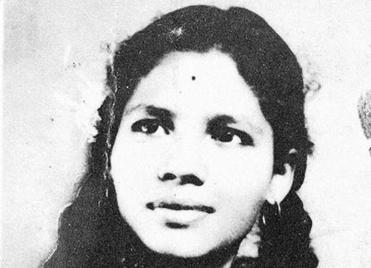
Euthanasia, mercy killing, assisted suicide, physician aid in dying is debatable issue. Even if it is desired by the person concerned, it poses moral dilemma for those who have to take the decision. In our country, it is punishable and this question is referred to the constitutional bench in Common Cause vs Union of India 2014 SC (Supp) 1456 = 2014(5) SCC 338 after disagreeing with Aruna Ramachandra Shanbaug Vs Union 2011(4) SCC 454 = 2011 CrLJ (Supp) 301. The bench has sought the views of the government on the same. The following article considers the debate, moral dilemma, and law of the other nation in this regard. It also takes into account the latest decision of the Canadian Supreme Court in Carter Vs Canada upholding such right.
Aruna Ramchandra Shanbaug - picture courtesy Wikipedia

Tuesday, December 01, 2015

NATURE IS ASYMMETRICAL

The debate about gay rights is again heating up. The present Finance Minister, previous Home Minister have come out openly in its support and a prominent Congress MP has tweeted that he has moved a private member’s bill to decriminalize consensual sex between adults of any gender (partial amendment of section 377 Indian Penal Code).

In early 1990's I had written an article in support of gay rights. It was an inter disciplinary study, connecting gay rights with conservation of parity and Right-Left Symmetry. It also dealt with the Wolfendem Committee; its recommendation for decriminalisation of Homosexual behaviour in England and similar laws in other parts of the world. But it was not published by any magazine or newspaper - the idea was too bold for those times. Then it was published in my book 'A Lawyer's World and Childhood dreams'. Here it is, after updating the contents since then.

The article deals with Law as well as physics. Not many are interested in details about both fields. But in case you are, in any one or both of them then details are in the Endnotes.  


Friday, August 21, 2015

NIGHT DRAMA THAT SUCCEEDED

Kalyan Singh was the Chief Minister of Uttar Pradesh and Romesh Bhandari was the Governor. He,  illegally dismissed the Kalyan Singh Government on 21st February, 1998.  A writ petition was filed the same night and he was reinstated. This is the only time that the a deposed head of a State was put back in saddle by the court. Here is the account of the same. 

Raj Bhavan Lucknow, where impugned order was passed - courtesy official website of the Raj Bhavan
The writ petition at the Allahabad High Court was filed in the name of Dr. NKS Gaur, an MLA from Allahabad North and Minister of Higher Education in UP, but for the sake of convenience, the case is referred as 'the Kalyan-Singh case'.  

During my tenure as a judge, it has been matter of speculation/ complaint how I became Additional Advocate General and why was this case entrusted to me. This is explained in Appendix-I to this article. In order to complete the picture, Romesh Bhandari's perspective is mentioned in Appendix-II.

Friday, July 31, 2015

A LAWYER'S DUTY

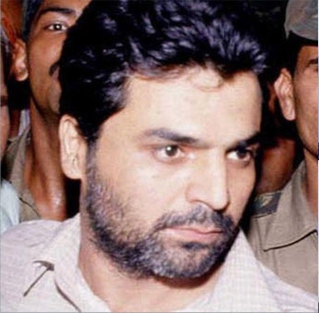
Yakub Menon - picture courtesy Wikipedia
Yesterday, on my way to the Supreme Court, my driver asked me a question, echoing the popular sentiment―should the lawyers do what they did to save the life of Yakub Menon, a terrorist. Here is my take on this. 

IT LIES IN THE HEART
(These articles were written before I was elevated as the High Court judge on 5th February 1999 and were also published. Since then they have been updated.)

The Emergency
।। Independent India's Darkest Period।। Supreme Court's Shame।। More Executive Minded Than The Executive।। My Diary: Logbook 109-111।।

Case Study
 

Comments
।। A Lawyer's Duty।। Euthanasia And Conscience To Keep।।

Life sketches

Draft Bills

Saturday, July 04, 2015

IT MEANS WHAT I CHOOSE IT TO MEAN

This post is about: 
  •  'Alice in Wonderland' by Charles Lutwidge Dodgson though published under the name of Lewis Carrol, the most quoted book in the business and legal world; 
  •  Liversidge v. Anderson 1941 (3) AllER 338 (the Liversidge case), an overruled decision of the House of Lords, that was heavily relied on in ADM Jabalpur v. Shiv Kant Shukla AIR 1976 SC 1207 (the Habeas Corpus case), where majority of our Supreme Court wrongly held that writ of Habeas Corpus was not maintainable during emergency; and 
  • The Classic dissent of Lord Atkins in the Liversidge case.

Alice’s Adventures in Wonderland, begin with going down a hole in pursuit of a white rabbit. In this world things turn 'curiouser and curiouser'. This painting by William H Bond depicts the same. It is taken from this page of the National Geographic, where more details as to how book was written can be read.


IT LIES IN THE HEART
(These articles were written before I was elevated as the High Court judge on 5th February 1999 and were also published. Since then they have been updated.)

The Emergency
।। Independent India's Darkest Period।। Supreme Court's Shame।। It Means What I Choose it to Mean।। My Diary: Logbook 109-111।।

Case Study
 

Comments

Life sketches

Draft Bills

Thursday, June 25, 2015

INDEPENDENT INDIA'S DARKEST PERIOD

It is first post of the series 'It Lies In The Heart'.

Internal emergency was imposed 40 years ago. My father VKS Chaudhary was first detained under DIR then under MISA. He was released after emergency was lifted. Here are some lessons from that time.
My father, VKS Chaudhery, was detained during emergency. He was released after emergency. Here he is being brought after he was released from jail.

Sunday, June 07, 2015

RAJJU BHAIYA AS I KNEW HIM

Father of the  author and Rajju Bhaiya - sharing an intimate moment
Professor Rajendra Singh (29.01.1922 – 14.07.2003), or Rajju Bhaiya as he was known, was fourth (from 1994 to 2000) Sar-Sangh Chalak (chief) of Rashtriya Swayam Sewak Sangh (RSS). He was with the Department of Physics, University of Allahabad. He was one of the finest  teachers to have walked in the corridors of the University. However, he left the University in mid 1960's and dedicated his life to social work.  

Saturday, August 18, 2012

QUEST FOR A MILLION DOLLARS: Srinivasa Ramanujan - The Genius

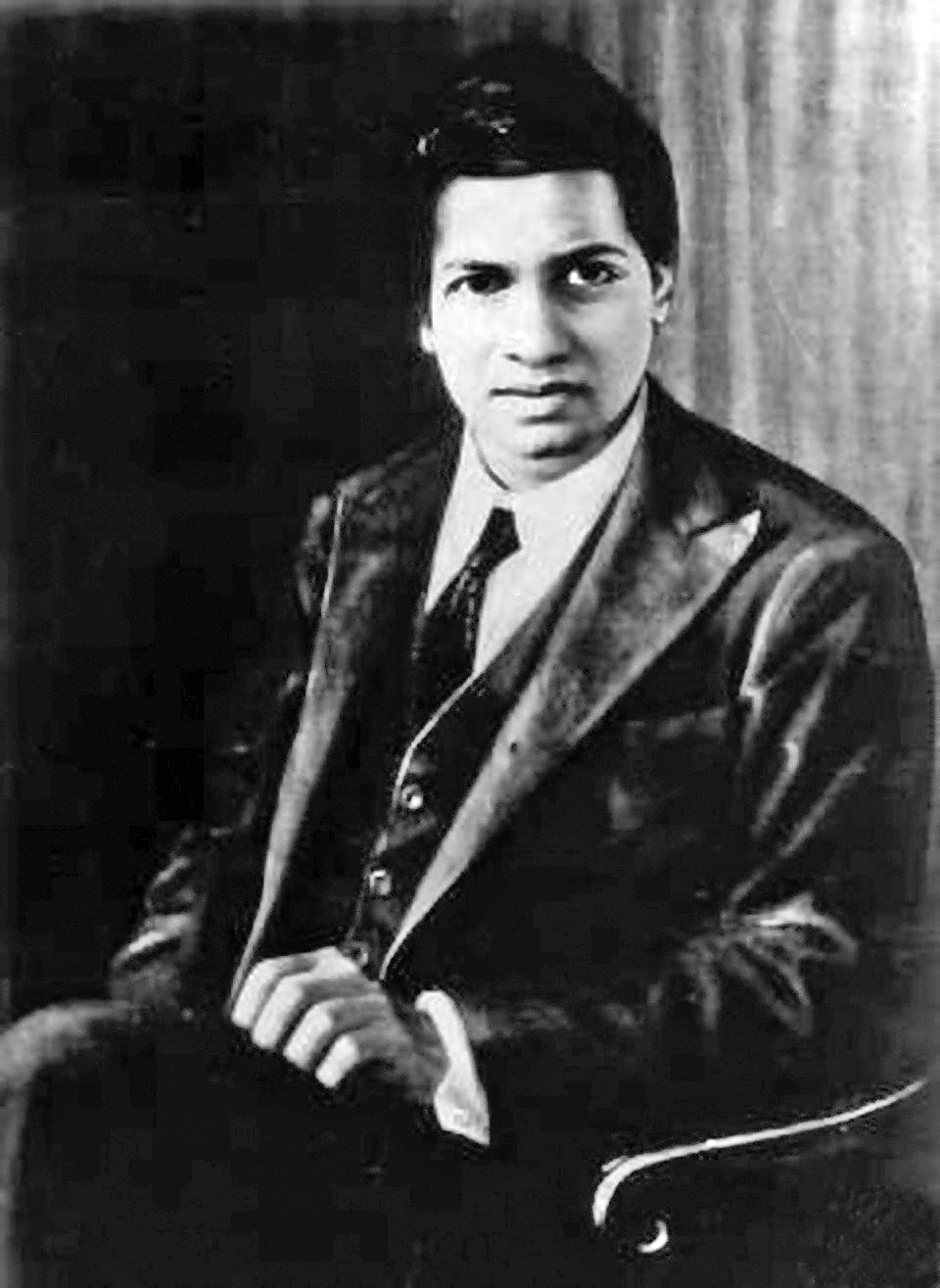
Srinivas Ramanujan
(Summary: This year is the 125th birth anniversary of  Srinivas Ramanujan.   The Government of India has  declared it, as the year of Mathematics; and his birth date 22nd December has been declared as the National Mathematics Day. On this occassion, this is a tribute to this great mathematician.
It was also delivered as a talk by Justice Yatindra Singh in the Department of Mathematics, University of Allahabad, Allahabad on 18th, August 2012.
A pdf format of the text and presentation can be downloaded from here and here)

Monday, November 02, 2009

GODS ARE DREAMS OF MEN: The Story of Darwin, Creationism, Evolution and Law Courts

Charles Darwin 1809-1882 
(This is the text of talk delivered by Justice Yatindra Singh, Judge Allahabad High Court, in the inaugural function of Zoological Society University of Allahabad in DR Bhattacharya auditorium, Nehru science centre on 31st October 2009. Summary: It is a tribute to Charles Darwin on his bicentennial birth anniversary and 150th year since publication of 'On the Origin of Species'. It talks about his life, origin of species, objections of the creationists, and the cases banning teaching of 'Origin of Species' or requiring the schools to teach creationism/ artificial intelligence. Click here to download the pdf format of the article.)

Friday, May 05, 2006

IN THE MATTER OF ‘EPIMENIDES’

Paradoxes are self-contradictory statements; only careful scrutiny reveals their meaning.  They have function in poetry, their function goes beyond mere wit or getting attention.  Logical paradoxes are highly amusing and often tantalising and generally lead to searching discussions on the foundations of mathematics. 

The most talked about paradox of all times is Epimenides or the liar’s paradox. Epimenides was a Greek poet who lived in Crete in 6th century BC. He remarked, ‘All Cretans are liars.’ It is self-contradictory for Epimenides was a Cretan himself.  If you take it to be true, it turns out to be false.  If you treat it false, then it turns out to be true. 

An English mathematician, PEB Jourdain gave a similar dilemma, in 1913, when he proposed the card paradox.  On one side of the card, it was printed that ‘The sentence on the other side of this card is TRUE'.  The print on the other side of the card was, ‘The sentence on the other side of this card is FALSE'.  

The same is true of the barber paradox, proposed by Bertrand Russell. It is also known as the Russel's paradox.  It goes like this.  There was one barber in a village.  He declared that he shaved everyone in the village, who did not shave himself. On the face of it, this is a perfectly innocent remark until it is asked ‘Who shaves the barber?’ 

Russell’s paradox hinges on the distinction between classes that are members of themselves and those that are not members of themselves. Bertrand Russell and Alfred North Whitehead attempted to resolve the paradox in Principia Mathematica (1912) by introducing the concept of a hierarchy of logical types but were not successful.

Kurt Gödel 
Kurt Gödel was an Austrian-born U.S. Mathematician and logician. He ultimately resolved it in 1931.  He proved that these paradoxes cannot be solved. According to him one may start with any set of axioms and yet there will be propositions (or questions) which can neither be proved nor disproved on the basis of the axioms within that system and therefore, the basic axioms of arithmetic will give rise to contradictions. His proof ended nearly a century of attempts to establish axioms that would provide a rigorous basis for all mathematics. This proof has become a hallmark of 20th-century mathematics, and its repercussions still continue to be felt and debated. 

Gödel's proof was written in German. The English translation of the title of his proof was 'On formally Undecidable Proposition of Principia Mathematica and Related Systems'. It first appeared in an article, in German in the Monatshefte für Mathematik und Physik, vol.  38 (1931) Pg. 173-98.

There is a parallel in law. It is commonly assumed that all judicial decisions are taken on the basis of reason. Well, it is not true, at least not for most important decisions.  Justice Holmes rightly points out that ‘The life of law is not logic’.  Just as all problems of Mathematics cannot be solved by logic, so is the case in Law; not all cases are decided on reason.  Often decisions are taken first, reasons are found later.

The article below, an inter disciplinary study, is written in the form of judgement of a Court. Here a senior lawyer sued his junior for his ‘Guru Dakshina’ (a fee given by the student to the teacher) and difficulties faced by the judges due to the peculiar terms of the contract governing its payment. The junior was to pay the fee only when he won a case and he had not won any. 

The article examines the connection between liar's or Epimenides' paradox' and the decision-making process.  It also explains the paradox and its impact in the field of Mathematics, Literature, and Philosophy as well as on jurisprudence. It is an extension of the earlier article ‘Decisions Are From Heart Rather Than the Head’. 

‘These are old fond Paradoxes to make fools laugh in the alehouse’. Unfaithfully faithful Desdemona in Othello Act-I Scene-I

‘Let the jury consider their verdict’, the King said, for about the twentieth time that day.

‘No, no!’, said the Queen. ‘Sentence first—verdict afterwards.’

(From Alice in Wonderland by Lewis Carrol)

Sunday, April 23, 2006

IN THE MATTER OF ‘A JUDGE’

Picture - courtesy Wikipedia
 In State of Uttar Pradesh Vs. Ramesh Prasad Misra- AIR 1996 SC 2766 (the RP-Misra case), a young 19 years old wife, who was married five months ago, was killed in the night intervening 26-27th September, 1985. Her husband, an advocate, was the main accused. He was sentenced to death by the sessions court. His appeal was allowed by a Division Bench of the Allahabad High Court. 
The state filed an appeal before the Supreme Court. It was allowed, and observations were made against the High Court judges. 
 The Supreme Court while allowing the appeal also relied upon section 113-B of the Evidence Act that was inserted by Dowry Prohibition Act (43 of 1986) wef 19.11.1986 after the date of the incident. It is debatable whether section 113-B of the Evidence Act was applicable to the facts of the case or not.
Nonetheless, even if section 113-B was not applicable, the husband ought to have been convicted; he could not be acquitted—there was no necessity of taking recourse to section 113-B of the Evidence Act.
However, the observations made against the High Court judges were uncalled for; particularly, with the help of section 113-B of the Evidence Act. 

 This article was prompted because of the observations against the High Court judges in the RP-Mishra case and was written at that time, though some modifications have been since then. It was a protest against higher courts making observations against the lower courts. 

 The article is written as a judgement of a court and deals with a case where a judge of the subordinate court (the Plaintiff) sued another judge of the higher court (the Defendant) for making an observation against him, after placing a different interpretation than the one, which was prevalent at the time when the Plaintiff decided the case. 
 In this process, the article traces the history of law relating to liability of a judge while acting judicially. It took some time to understand that independence of the judiciary is not possible unless judges are protected. There is no point losing it.

Monday, April 10, 2006

HONI ANHONI TV SERIAL AND THE MONKEY TRIAL

Doordarshan had come out with a serial Honi Anhoni.  It had episodes that encouraged belief in supernatural.  This was sought to be prohibited. Aurangabad bench of the Bombay High Court granted interim injunction restraining the Doordarshan to telecast it. But in Odyssey Communications Pvt. Ltd. Vs Lokvidayan Sangathan AIR 1988 SC 1642 (the Honi Anhonee case) our Supreme Court allowed the appeal and permitted the telecast.  

Scene from 'Honi Anhoni', where a dead girl comes back every year on date of his death.
Darwin's 'Origin of Species' was banned in US.  In 1920's Scopes, a biology teacher was prosecuted for teaching Origin of Species.  This case is commonly referred to as the Monkey Trial. 
There was another statute Balanced Treatment for Creation-Science and Evolution-Science in Public School Instruction Act (Creationism Act) in the State of Louisiana, US.  Its vires was challenged in Edwards Vs Aguilard (482 US 510).
This article is a comparative study of these cases. 

THE ISSUE BEFORE THE COURT

This is the second post of the series 'THE HABEAS CORPUS CASE AT FIFTY: The Emergency, the Court, and the Constitution'. It talks ab...