Showing posts with label Advocate. Show all posts

Monday, May 11, 2020

LOUIS NIZER - LAWYER TO THE FAMOUS: लुई नाईज़र – जाने मानो के वकील

Here is first one Louis Nizer, America’s most famous trial lawyer during second half of the last century. 

इस पोस्ट में, चर्चा है लुई नाईज़र के बारे में जो पिछली सदी के उत्तरार्ध के दौरान, अमेरिका का सबसे प्रसिद्ध ट्रायल कोर्ट का वकील था। 

LegalTrek - Biography

Saturday, January 07, 2017

Clarence Darrow for the Defense

Clarence Darrow was most prominent American lawyer around end of nineteenth and beginning of twentieth century. Irving Stone has written his excellent biography ' Clarence Darrow for the Defense'. 
This post and some next following posts of the LegalTrek series are about Clarence Darrow and his biography.
 

Tuesday, July 19, 2016

Art of Cross Examination


This is the ninth post of the series 'LegalTrek'. The last post was 'Leibowitz - The First Case' and this post is about importance of cross examination, a good book on the same and how Samuel Leibowitz used it in a case. 


LegalTrek 
How I Became A Lawyer।। Allahabad High Court Is Born।। Lucknow Bench - Historical Necessity।। Introduction to Setalvad।। Benches and The Law Commission।। Court of Appeal – Not A Good Idea: Some Suggestions।। Courtroom - Finest Legal Biography।।Leibowitz - The First Case।। Art of Cross Examination।।


Sunday, March 17, 2013

RESPECTING THE OLD


This article refers to the history and functions of Bar Council as well as duties and traditions of a lawyer.
This speech was delivered on 16.03.2013 in a function organised by Chhattisgarh State Bar Council to felicitate the lawyers completing 50 years of practice. 
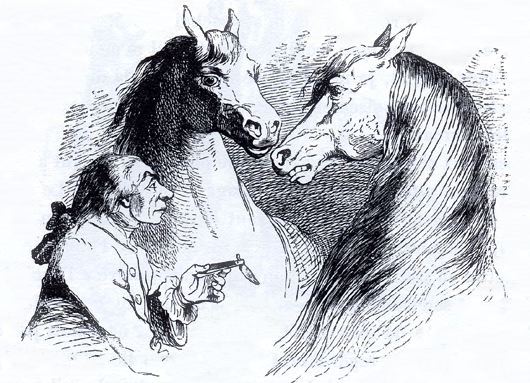
Gulliver in discussion with Houyhnhnms (1856 lllustration by J.J. Grandville.) courtesy Wikipedia

Sunday, July 11, 2010

PREJUDICE—WOMB OF INJUSTICE

(Summary: The article by Justice Yatindra Singh talks about the novel 'To Kill a Mockingbird' by Harper Lee on the 50th year of its publication, the Scottsboro Boys' Case that inspired it, Samuel Leibowitz the leading lawyer in the case, and his biography 'Courtroom'.
 A pdf format of the article can be downloaded by clicking here.
It was later delivered by Justice Yatindra Singh in the Faculty of Law, University of Allahabad on 21.8.2010.) 
Here, one can read it in Hindi.

Sunday, March 29, 2009

INFORMATION TECHNOLOGY AND THE LEGAL PROFESSION

The three generation in legal profession
(Summary: This paper explains how information technology may be used by the persons pursuing legal profession.

This was read by Justice Yatindra Singh, judge Allahabad High Court Allahabad at Kerala Law Academy Trivandum on 12.3.09 and before Karnataka Judicial Academy Bangalore on 23.3.2008.)

Saturday, November 18, 2006

TO ROBE OR NOT TO ROBE

It is about lawyers’ uniform. Should we, the lawyers, continue with bands, gowns and black coats even during summer and the rainy seasons?

What would you say, if you see a person in a suit and a tie in the scorching heat of May (450 C) or in the humid climate of July? Is there any such person? Think again. There are many. Their reputation is neither envied in the world nor their fate thereafter. Yes, it is we the lawyers. Instead of a suit it is a combination. And in the place of tie it is band and on top of the entire ensemble there is a gown.

When the British came to India, they, along with their legal system, also introduced the lawyer’s attire. And when they left, they, alongwith their finest legacy- the legal system, bequeathed the black coats, bands and gowns. Dress among the legal fraternity was often governed by traditions. The High Courts have also made rules in this regard. Normally in case of the male members, apart from other things, they are require to wear: a black buttoned up coat, or open collar coat, or Achkan, or Sherwani with bands and a gown. Under the rules female members were exempted from wearing coats at least.

WIGS, BANDS Etc.
Historically speaking, wigs were first used as a personal adornment and not for any other purpose. Barristers started wearing them in the beginning of the eighteenth century. According to Dennin,
'it conceals the personality and the boldHead. .... It is a mark of authority and a source of respect.' (What next in law; Lord Denning)
Good reasons but not all need them. Wigs are absolute in India. No one wears them, except may be Judges on ceremonial occasions. Thank goodness. What a relief! They are still worn in England by Judges and Barristers. Bands, weepers, bibs, neck cuff or collar cuffs came to be worn by barristers around the same time as wigs.
'Counsel ... seem to take great pride in the wearing of collar cuffs whose purpose, I have been told, is to wipe tears after an emotional pleasure. Perhaps due to this, collar cuffs [came to be] ... later known as weepers.' (Wigs and Weepers; George Joseph).

HEAD DRESS
What about head dress? Traditionally English headdress (Hat, Cap etc.) is not worn inside a building. They have never been worn inside the court. But what about the Indian head dress! According to Hindu tradition, covering one’s head is to show respect. The Indian head dress can always be worn inside the courts. The members of legal fraternity have always been wearing Turbans or Safas- a sight quite common during the British Raj, though so common now.

LEGISLATION
It is not that efforts were not made to legislate on the legal profession earlier. The comprehensive Act, the Advocates Act, was enacted in 1961. Section 34 of the Act gives power to the High Court to lay down conditions subject to which an Advocate shall be permitted to practise. Different High Courts already had rules or have since made rules prescribing a dress code for Advocates. Section 49(1)(b) permits the Bar Council of India to make rules for the conduct and etiquette to be observed by advocates. The Bar Council of India has framed a rule to the effect that an Advocate shall appear in court at all times only in the prescribed dress and his appearance shall always be presentable. It does not, however, prescribe any dress.

The Advocates Act has been amended (Act No.60 of 1974); Section 49(1)(g)(a) has been added. It permits the Bar Council to frame rules about dress to be worn by Advocates having regard to the climatic conditions. Different rules made by the High courts and the traditions followed by them may be irrelevant now. The Bar Council has made a rule, which also permits dhoti to be worn. It provides for black coat. Achkan or Sherwani with bands for all and gown being optional for Advocates appearing before lower courts.

REASONS FOR A UNIFORM
Let's come back to the original question. Why should one continue to wear coat, bands and gowns in a climate totally unsuited for such attire? Is it because it suited the British climate that we have been wearing them? The British themselves are having doubts about it. Some have been giving reasons for their continuance, ‘
the uniform is also a permanent reminder of professional discipline, not a guarantee of good behaviour but a great aid to it. .... The robes of Judges- speak of continuity of development, of responsibility. They remind him that he is not an isolated individual acting for himself alone, here today and gone tomorrow’. (Topelsk’s Legal Land.)

In the Indian context some answers were provided by Justice MN Shukla in Prayag Das Vs Civil Judge (AIR 1974 All 133). Prayag Das, an Advocate, was debarred by Civil Judge for appearing in a Dhoti. He filed writ petition to justify his stand. Allahabad High Court rules, for subordinate courts, by necessary implication, excluded wearing of Dhoti. The court, in para 18 of the report, speaking of the prescribed dress says,
‘In the first place they distinguish an Advocate from a litigant. In the second place it induces a seriousness of purpose and sense of decorum, conducive to the dispensation of justice. If the rule is relaxed Advocates may start to dress more scantily and even indiscreetly’.

This may be sufficient reason to uphold a rule. But, is it sufficient for not relieving us of this burden, on the administrative side? Should we continue to have insults of black coats, bands and gown? At least Advocates appearing in their personal capacities have always disrobed (References of a few such cases are Smt Vidya Varma Vs Dr Shiv Narain Varma AIR 1956 SC 108, T Venkanna Vs The Hon’ble High Court of Mysore AIR 1973 Mysore 127: R Vs Evans 1961 (1) AllER 319).

Justice Megarry in St. Edmundsbury in Diocesan Board Vs Clark ([1973] Ch. 323) remarked,
‘Robes are convenient in normal circumstances as indication of the functions of those engaged in proceedings as enhancing the formality and dignity of grave occasion; they also level visual differences of age, sex and clothing and so aid concentration on the real issue without distraction: but robes are not essential and the court may dispense with them where there are good reasons. Jurisdiction is neither conferred nor excluded by mere matter of attire’.
He thought robes to be
‘unduly burdensome to all concerned, if they were required to be robed in the usual way merely for the purpose of hearing the evidence of one witness and there could be difficulties as to the provisions of the suitable robing room. Accordingly, I shall not robe; counsels shall similarly not be robed’.

Well if this is sufficient reason to dispense with coat, gown and band, then why should Advocates continue to wear them during summers at places where the temperature is more than 45 degree Celsius. There is no earthly reason to do it except that it was done in England. This dress may be fine in Jammu & Kashmir or Himanchal Pradesh or some parts of Uttar Pradesh but not at all suitable for most of the country during summers.

CONCLUSION
Well, should we or shouldn’t we robe? There is no doubt that,
‘from a purely practical point of view, they (robes) are great levellers, so far as the Bar is concerned. In robes the most poverty-stricken junior will not be put out of countenance by a Savile Row suit on a fashionable opponent’. (Topelsk’s ‘Legal Land)
But is it necessary to prescribe black coat, bands and gown during summers? Some other dress in accordance with the summer climate may be provided. The rule framed by Bar Council of India may not be held ultra vires of Section 49(1)(g)(a) but it is undoubtedly not in line with it.

What kind of robes should be provided for? Wouldn’t it be lovely to have a fashion show to select one. Alas, we the lawyers are too conservative. Let me make a few suggestions- without fashion parade. A short sleeve, sober colour Safari suit is an excellent idea. May be a short sleeve shirt tucked into trousers, Army style, of course with different colours, is an equally good one. We may also retain the gown to be worn on top. An Advocate may also wear a nametag. The time has come when we must bid good bye to the black coat, bands and gown, the last signs of British legacy. If we have to inherit, something we had rather inherit their independence of the Bar and Judiciary rather than bands, gowns and black coats.

Tuesday, November 07, 2006

LAWYERS' CREED

The role of lawyers is often misunderstood. This article clarifies it.

The Prime Minister has made a statement in the Parliament on 10, April 1989 about the defence lawyers in the Indira Gandhi murder case. His sentiments were rather unfortunate. The role of lawyers is often misunderstood. This is how Jonathan Swift places them in Gulliver's Travels, that lawyers are a,
'society of men bred up from their youth to prove that black is white and white is black accordingly as they are paid.’
And these sentiments are shared by many.

The Prime Minister misunderstood the role of the lawyers. So has the public. There was similar criticism when some lawyers took up defence briefs for the Sikh soldiers charged with mutiny in 1984. This happened after Operation Bluestar. Sikh sepoys of the Sikh Regiment Centre, Ramgarh, had looted arms and ammunition, killed their commanding officer, and started for Amritsar. I remember the criticism and the contempt for I defended them (see End Note-1). Many were court martialled at Allahabad (see End Note-2). No lawyer can or should refuse any case merely because of the personalities involved.

Let me tell you about the Thomas Erskine - one of the greatest advocates of all times. He was born in the eighteenth century of parents. Who had fallen on hard times. He took up law on the advice of Lord Mansfield. He had no briefs and got his first case entirely by chance and argued only because he had advised against compromising the case. His client also did not want to compromise (see End Note-3). He started his speech in the case as an unknown beginner at the Bar and ended as a national hero. According to Lord Campbell,
'As an advocate [He] was without an equal and ancient or modern times. [The reason -] he defended his client as if his own life was in danger'. (All Jangle And Riot- A barrister’s history of the bar by RG Hamilton; published by Professional Books Ltd.)

It was in his time that Thomas Paine wrote a book etitled 'Rights of Man'. It contained several offensive remark about the monarchy, for which Paine was prosecuted for saditious lebel The prosecution was conducted in absentia since Paine has gone to France. Erskine personally never approved of the book. In fact, at that time, very few in England did. He had been advised not to accept the case. Lord Loughborough went out of the way to tell him not to take Paine's brief. But Erskine refused. He accepted the case for the defence. His address to the jury sums up the role of lawyers.
‘I will for ever at all hazards assert the dignity, independence and integrity of the English Bar without which impartial justice, the most valuable part of the English Constitution, can have no existence. From the moment that any Advocate can be permitted to say that he will or will not appear for an accused arraigned in the court where he daily sits to practice, from that moment the liberties of England are at an end. If the Advocate refuses to the charge or the defence, he assumes the character of judge, nay he assumes it before the hour of judgement and, in proportion to his rank and reputation puts the heavy influence of perhaps a mistaken opinion into scales against the accused in whose favour the benevolent principle of English law makes all presumptions and which commands the very judge to be his counsel.’

It is besides the point that Paine was convicted or that Erskine lost the office of Attorney General to the Prince of Wales.

One must remember advocates were pressurised and advised not to accept the cases of detenues during the Emergency (see here and here). Erskine’s speech is still relevant today. It is still a model that guides a course of action for lawyers.

End Note-1: The recruits, who had yet to pay their pledge (kasm) were court martialled at Jabalpur. JCOs and NCOs were court martial at Allahabad. This was after Mrs. Indira Gandhi was assassinated. The mazimum punishment was the death penalty for those tried at Allahabad. The Court martial could not proceed unless a defence counsel was provided. The Court atmosphere was very tense, more so because of the assassination of Mrs. Indira Gandhi. There was so much of animosity that: many refuse to talk to Sikhs; no lawyer was willing to take up their cases. It is only after two cases were conducted by me that others took up their cases. I was criticised not only by my friends (serving in the defence) and outside (but also by my professional colleagues). My father was the one who supported me. This surprise may JCOs and NCOs, who were tried at Allahabad, were generally giving five years rigorous imprisonment and were dismissed from service. The recruits were not dismissed but were sent to different units on different purposes.

End Note-2: I had done many writ petitions against the court martial but this was my first and only experience of the court martial. In a trial by jury the Judge is a legally trained person and voices the jury for their verdict on question of fact. The jury only has to say guilty or not guilty. It is similar to a court martial though here Judges (normally three, five or more with one as a presiding judge) are defence personnel; not legally trained. They pronounced on facts as well as on law. There is a judge advocate, a legally trend person who advice them in a court judges normally enter after lawyers and litigants have entered and all present rise. It is discourteous if a lawyer, who has a case, is not already present. Lawyers also never leave a court till the judges have reason. It is discourtesy to leave a judge alone in a court. But in a court martial it is the other ways, judges are first to enter and last to leave. I was told that this is due to security reasons. The other difference I found was that the court has fixed timings. One has to conduct a case throughout the entire time or till the case lasts. But in a court martial, it is expected that the defence counsel would ask for the time in between. The first day in the court martial when I did not ask for the time, the Judges got uncomfortable and I was advised by the defence officer, who was briefing me, to seek adjournment.

End Note-3: This is in short how it happened, so well recorded in All Jangle And Riot A- barrister’s history of the bar by RG Hamilton.

'Captain Baillie was the Lieutenant Governor of Green Wich. The Hospital should have housed sailors only. But persons in high places found it convenient to put their civilian friends there. This was enough to cut the sailors’ ration. Captain Baillie complained many times of these abuses, to no avail; so he published a pamphlet criticising Lord Sandwich the first Lord of the Admiralty. He was not only suspended but prosecuted for criminal libel. Erskine had no work. In the coffee-house he overheard a naval officer. Erskine, generous with his opinion, offered him his. He launched into attack on the enemies of the Captain Baillie. As the luck would have it he was talking to Captain Baillie himself. This was how he was engaged in the case. But he was the junior most of the team of five selected to defend Captain Baillie. In conference his colleagues were for settling the case but Erskine advised against the same. Baillie though he was the man for him.
This is how Erskine argued "I cannot relinquish the high privilege of defending such a character," he said; "I will not give up even my small share of the honour of repelling and exposing so odious a prosecution... That such wretches should escape chains and a dungeon is a reproach to humanity, and to all order and government; but that they should become prosecutors is a degree of effrontery that would not be believed by any man who did not accustom himself to observe the shameless scenes which the monstrous age we live in is every day producing. Indeed, Lord Sandwich has, in my mind, acted such a part."
This was intolerable. Lord Mansfield intervened to remind him that Lord Sandwich was not before the Court. Erskine retorted:
"I know that he is not formally before the Court, but for that very reason I will bring him before the Court: he has placed these men in the front of the battle, in hopes to escape under their shelter, but I will not join in battle with them. I assert that the Earl of Sandwich has but one road to escape out of this business without pollution and disgrace: and that is, by publicly disavowing the acts of the prosecutors, and restoring Captain Baillie to his command"
He came to a thundering conclusion, "if he keeps this injured man suspended or dares to turn that suspension into a removal, I shall then not scruple to declare him an accomplice in their guilt, a shameless oppressor, a disgrace to this rank, and a traitor to this trust."
He started the speech as an unknown beginner at the Bar; he ended it almost a national hero. Even as he left the court, the attorneys flocked around him, to catch at his gown and brief him for their clients.'

THE ISSUE BEFORE THE COURT

This is the second post of the series 'THE HABEAS CORPUS CASE AT FIFTY: The Emergency, the Court, and the Constitution'. It talks ab...